
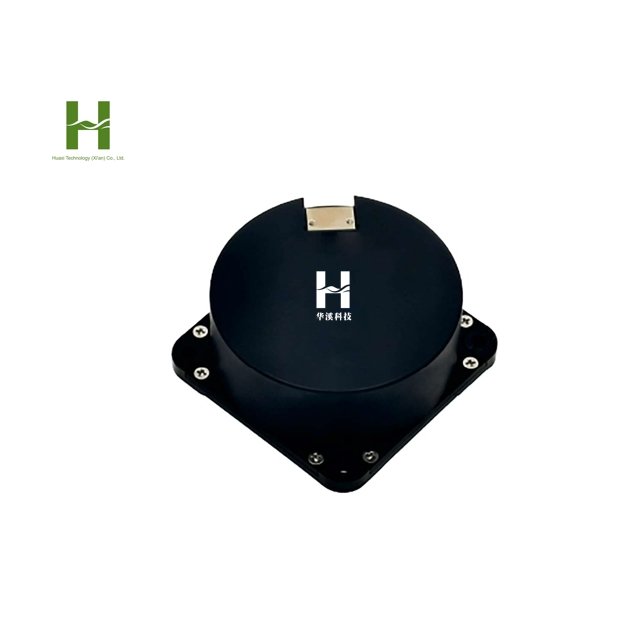
Over the past few decades, inertial navigation technology has undergone significant evolution. From early mechanical gyroscopes to modern micro-electromechanical systems (MEMS) and fiber optic gyroscopes (FOG), inertial navigation has become a key technological support in the fields of aviation, aerospace, marine, military, and automation equipment.
In this article, we will focus on introducing the development and advantages of fiber optic gyroscopes (FOGs), helping you understand why FOG is becoming one of the preferred technologies for high-precision inertial navigation systems.
What is a fiber optic gyroscope (FOG)?
A Fiber Optic Gyroscope (FOG) is a gyroscope that operates based on the interference principle, measuring angular velocity by detecting the phase difference of light propagating through a circular fiber. Unlike traditional mechanical gyroscopes, FOGs have no rotating parts, thus offering higher reliability and longer lifespan.
Why choose FOG? Key technical advantages
√ High precision
FOG provides sub-degree accuracy and maintains excellent stability in dynamic environments, making it suitable for applications that require extremely high navigation accuracy, such as missile guidance, shipborne systems, and ground-based lidar platforms.
√ No mechanical wear
Due to the absence of moving parts, FOG does not suffer from the wear and tear issues of traditional gyroscopes, enabling it to operate stably in extreme environments. This makes it particularly suitable for long-duration missions in marine, aviation, unmanned platforms, and other fields.
√ Quick launch and response
Compared to Ring Laser Gyro (RLG), FOG has a short startup time, can quickly enter working state without preheating, and supports high-frequency, low-latency attitude change detection.
√ Integratable design
FOG can be integrated with accelerometers and magnetometers to form a high-precision inertial measurement unit (IMU), which is widely used in integrated systems such as unmanned system navigation, attitude control, and inertial positioning.
Application case: Actual usage scenarios of FOG
Autonomous navigation: As a backup navigation system in case of GPS failure, FOG provides continuous and seamless position and direction information.
Geological and mining surveying: In underground or highly disturbed areas, FOG can still provide precise directional reference.
Aircraft inertial navigation: The detection of angular velocity in high-dynamic flight environments demands stringent accuracy, making FOG (Fiber Optic Gyroscope) a standard component in most military and civilian flight control systems.
Stable platform control: Maintain the stability of devices such as radar and cameras on a mobile platform, with FOG providing continuous attitude correction.
Our technological advantages
At HX Gyro, we possess proprietary FOG algorithms and packaging technologies, boasting a comprehensive fiber optic gyroscope production line, enabling us to offer customized products tailored to customer needs. We support:
▷ Packaging design under high temperature and harsh environment
▷ Customization of multi-axis IMU
▷ Diversified communication interfaces (CAN, RS422, TTL, etc.)
▷ We are not only a product supplier, but also a technical partner for inertial navigation solutions.
Conclusion
As navigation systems play an increasingly important role in various industries, selecting the right inertial sensors has become crucial for the successful deployment of these systems. Fiber optic gyroscopes (FOGs), as a vital component of high-end navigation systems, are being increasingly adopted in cutting-edge projects. If you are interested in our FOG products or wish to learn more about customization options, please feel free to contact us for technical information or sample support.